
MYIO
ValantMedical
4.7684.00 Reviews
- Version
- 1.1.67
- Installs
- 100.00K
- Age Rating
- Everyone
Screenshots
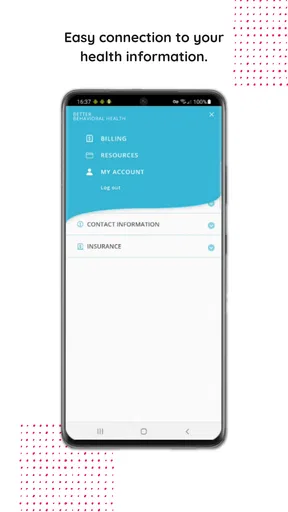
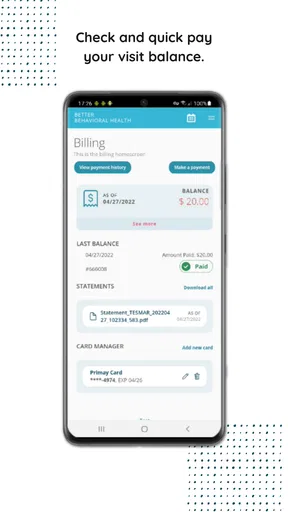
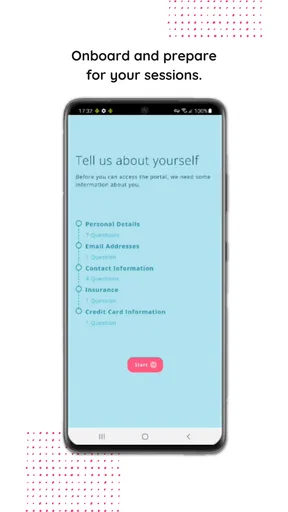
Our Review of MYIO
 Analysis by Appyee
Choosing a medical app is different from choosing a game or a general productivity tool. I want to know what problem it is meant to solve, whether it fits into an existing care routine, and whether using it feels straightforward when I am already stressed or short on time. MYIO is a behavioral health portal from Valant, and I found its purpose much clearer than that of a broad wellness app: it is designed around the connection between a person receiving behavioral health care and the service supporting that care.
That focus is both its main appeal and the first thing to consider before installing it. MYIO is not the kind of app I would choose simply to browse meditation ideas, track general fitness, or replace professional treatment. Its value depends on whether the clinic or provider I work with uses the Valant environment in a way that connects to my care. When that connection exists, a dedicated portal can feel more useful than trying to coordinate everything through ordinary messaging, paper reminders, or several unrelated apps.
What I would check before choosing MYIO
My first decision criterion is not the interface; it is fit with the provider. A behavioral health portal only becomes genuinely useful when the practice has a workflow for it. Before relying on MYIO, I would ask the clinic how patients are invited, what parts of care are handled through the portal, and whether the app is intended for routine communication, appointments, forms, or another part of the relationship. This is more important than downloading it quickly and discovering that my provider does not use the same system.
The second criterion is the kind of support I need. MYIO makes the most sense for someone who wants a central digital doorway into an existing behavioral health service. It is less suitable for a person looking for self-directed mental health content with no provider relationship. That distinction can save time: a self-care app may offer exercises and educational material, while a portal such as this is primarily about connecting the patient with care operations.
I would also consider how I normally manage appointments and personal information. If I already keep everything in a provider’s patient portal, adding another app may feel unnecessary unless MYIO is the portal that the practice actually supports. On the other hand, if my behavioral health provider has asked me to use it, having one dedicated place on my phone can be easier than searching through email threads or remembering which office uses which system.
There is also a practical question about the phone itself. MYIO supports Android devices running version 6.0 or later, so it is available to people using many older Android phones as well as newer ones. The app is free to install, and its content rating is Everyone. Those points make the initial barrier low, although the usefulness of the app still comes from the care relationship behind it rather than from the download alone.
I would not judge the app by its short store label, “MYIO,” because that tells a new user very little. The more meaningful description is its role as a behavioral health portal. In my view, anyone considering it should think in terms of access and coordination rather than entertainment, diagnosis, or emergency support. If I were facing an urgent mental health crisis, I would use the appropriate emergency or crisis service instead of waiting for a portal response.
The everyday situation where it makes the most sense
Imagine that I have a regular appointment with a behavioral health provider but often lose track of practical details between visits. I may need to remember what was discussed, check the next step in my care, or handle a routine task without making a phone call during work hours. A dedicated portal can reduce that friction because it gives the care relationship a consistent place on my phone. The benefit is not dramatic in a single moment; it is the small reduction in searching, guessing, and repeating information.
That scenario also shows why expectations matter. I would not assume that opening MYIO automatically gives me instant access to a clinician or replaces a scheduled appointment. The exact workflow belongs to the provider using Valant. My useful habit would be to treat the app as part of the clinic’s normal process: check it when the practice directs me to, keep notifications or reminders manageable, and continue using established urgent-care channels when something cannot wait.
Where MYIO is strongest
MYIO’s strongest quality is specialization. General communication apps are flexible, but that flexibility can become messy when a person is trying to manage behavioral health care. A dedicated portal signals that the app belongs to a particular care process. For me, that makes it easier to separate clinical administration from ordinary chats, social notifications, and personal notes.
The app is also appealing because it is connected to Valant rather than presented as a standalone wellness product. That gives it a clearer place in a provider’s workflow. If my practice already uses Valant, MYIO is more likely to feel like a natural extension of the relationship than an extra tool I have chosen independently. This is a key trade-off: the app’s focus can make it more relevant for the right user, but less useful for someone whose provider is outside that ecosystem.
Another strength is the low-cost entry point. MYIO is free, which means I can try the app without committing money to a subscription. Its availability on older Android software also helps people who do not replace their phone frequently. I still would not confuse “free” with “complete”; the real value is determined by what the connected practice enables and how consistently the patient uses the portal.
The public response is encouraging without being a reason to stop thinking critically. MYIO holds a 4.7 average from around 5.6 thousand ratings, with more than 600 written reviews and over 100 thousand installs. I read those figures as evidence that many people find the app useful enough to keep using, not as proof that every clinic workflow or device experience will be identical. A portal can be well received overall and still feel limited when a particular provider uses only part of its available process.
In practical use, I see three less obvious advantages. First, a dedicated portal can reduce the mental load of remembering which channel belongs to which care task. Second, it can make a provider’s preferred process easier to follow because the patient is not inventing a separate system. Third, it creates a clearer boundary between behavioral health administration and the rest of the phone. That boundary matters to me because health-related conversations can easily disappear inside general email or messaging histories.
My advice is to install it at the beginning of a care relationship rather than waiting until a task becomes urgent. I would sign in when I have enough time to understand the layout, confirm that the correct provider connection is present, and check how the practice expects me to use it. Doing that early is a small but valuable workflow improvement: it prevents the first login from becoming another task on an already busy appointment day.
Small habits that make a portal easier to live with
I would keep my profile and contact details current, but I would avoid entering personal information casually if the app is not connected to the intended practice. I would also review the phone’s notification behavior instead of allowing every alert to interrupt the day. Behavioral health information is sensitive, and a notification preview on a shared or unlocked screen may reveal more than I want others to see. That is not a criticism unique to MYIO; it is a reason to use any health portal thoughtfully.
I would create a simple routine around it rather than checking constantly. For example, I might look at the portal after a scheduled interaction and again when I know the provider has asked me to complete or review something. This approach keeps the app useful without turning it into a source of unnecessary checking. It also helps me distinguish a pending care task from the expectation of immediate conversation.
A further tip is to keep a personal backup of questions I want to raise during an appointment, without treating that private note as a substitute for the portal. The app can support the provider relationship, but my own preparation still matters. Writing down changes in symptoms, practical concerns, or follow-up questions before opening the app can make the digital interaction more focused and reduce the chance that I use a portal message for something better handled in a scheduled clinical conversation.
Where another type of app may fit better
MYIO is not automatically the best choice for every mental health need. If I want guided breathing exercises, mood journaling, sleep routines, or general educational content without a provider, I would look at a self-care or wellness app instead. Those tools are built around independent use, while MYIO’s value is tied to a behavioral health service using the Valant platform.
If my main need is video calling with a therapist, a general communication service may be more familiar, depending on what the provider supports. If I need broad medical records across several specialties, a hospital or health-system portal may be more convenient because it gathers more than behavioral health information. And if I simply need appointment reminders, the clinic’s existing calendar or text-message system may be enough. The right alternative depends on whether I am trying to coordinate care, practice self-guided habits, communicate live, or gather records in one place.
This comparison does not make MYIO weak; it clarifies its boundaries. A specialized portal can be easier to understand than a large health platform, but it may not become my universal health dashboard. I would choose it when the provider relationship is the center of the task. I would choose something else when the center is independent wellness, urgent help, cross-specialty records, or a communication method the clinic already handles better.
There can also be friction when a person changes providers. If I move to a practice that does not use Valant, the reason for keeping MYIO may disappear. That is the cost of a focused ecosystem: it can provide a cleaner experience while I am inside it, but it is not necessarily portable in the same way as a general notes app or calendar. Before switching clinics, I would save any information I am entitled to retain through the proper clinical process and ask the new provider how records and ongoing care will be handled.
Another limitation is emotional rather than technical. Some people may prefer not to receive health-related reminders on a personal phone, especially if family members share the device or regularly see the lock screen. In that case, a web-based or phone-based arrangement managed directly with the practice may feel more private. I would not install MYIO on a device that other people can freely access without first considering screen locks, notification previews, and account security.
The real cost of switching
Because MYIO is free, the main cost of switching is not money. It is the time needed to learn a new routine and the possibility of splitting information between old and new channels. If I move from phone calls or email to the portal, I would want the provider to explain which method should be used for each type of request. Without that agreement, a patient can send something in one place while the office is monitoring another.
I would also expect a short adjustment period. The first use may involve account setup, permissions, notification choices, and learning where the practice places its updates. Even when those steps are simple, they can feel burdensome during a difficult week. My recommendation would be to complete setup during a calm moment, not immediately before an appointment or when I need an answer quickly.
Switching from a general wellness app has a different cost. I may lose the habit of opening an app for exercises or mood tracking because MYIO serves another purpose. I would not replace a helpful self-care routine with the portal unless my provider specifically recommends doing so. The two categories can complement each other, but they should not be confused: one supports independent habits, while the other supports access to a behavioral health practice.
There is also a communication cost if I assume that a portal message works like instant messaging. I would set realistic expectations and follow the provider’s instructions about response times and appropriate subjects. For time-sensitive or dangerous situations, I would use emergency resources rather than relying on a routine portal workflow. This distinction is one of the most important pieces of advice I can give a new user.
My recommendation after weighing the trade-offs
I recommend MYIO to people whose behavioral health provider uses Valant and wants them to have a dedicated mobile portal. For that audience, the app’s specialization, free access, and broad Android compatibility make it a sensible first choice. The strongest reason to use it is not a flashy feature; it is the possibility of making an existing care relationship more organized and easier to reach through one consistent channel.
I would be more cautious if I were choosing it without a provider invitation. In that situation, I would first contact the practice and ask how MYIO fits into care, what I should use it for, and what should remain a phone call or emergency contact. That quick conversation can prevent the most common disappointment: installing a portal and expecting it to function as a general mental health app.
MYIO is currently version 1.1.64, and Valant has positioned it specifically for behavioral health access rather than for broad medical or lifestyle use. I appreciate that narrow purpose because it makes the decision easier. If my goal matches the app’s role, I can evaluate it as a practical care companion. If my goal is different, a wellness app, broader patient portal, calendar, or direct communication option may serve me better.
My final view is positive but conditional. MYIO is worth choosing when it is the portal your behavioral health provider actually supports. I would install it early, configure privacy and notifications carefully, learn the clinic’s preferred workflow, and keep a separate plan for urgent needs. For a person already inside the Valant care ecosystem, that is a clear and reasonable recommendation. For everyone else, I would identify the care relationship first, then decide whether this focused portal belongs in the routine.
As a medical app rated for Everyone and offered free of charge, it is approachable for a wide range of users. Still, approachability should not be mistaken for universality. In my experience, the best reason to choose MYIO is that it can give behavioral health care a dedicated place on the phone without asking the patient to build a complicated system alone. When that is exactly the problem I need to solve, it is a practical option; when it is not, switching categories is the smarter decision.
Privacy and Permissions
See what permissions an app requests and how it handles your data.
- Photos/Media/Files
- read the contents of your USB storage, modify or delete the contents of your USB storage
- Storage
- read the contents of your USB storage, modify or delete the contents of your USB storage
- Camera
- take pictures and videos
- Microphone
- record audio
- Other
- view network connections, pair with Bluetooth devices, full network access, change your audio settings, draw over other apps, control vibration, prevent device from sleeping
Verdict
Strengths of MYIO
- Simple interface makes daily health tracking easy.
- Keeps key medical information available in one place.
- Useful tools can support better communication with providers.
- Helps users monitor personal health goals over time.
- Convenient access to records and wellness features on mobile.
Limitations of MYIO
- Some features may depend on your healthcare provider or region.
- Requires accurate input to keep personal health information reliable.
- Privacy settings may take time to understand fully.
- Not a substitute for professional medical advice or diagnosis.
- Performance can vary depending on device and internet connection.
Similar Picks in This Category
View All
WebMD: Symptom Checker
WebMD, LLC4.1

Microphone Amplifier
DOSA Apps4.2

Anatomy Learning - 3D Anatomy
3D Medical OU4.5

Period Tracker and Calendar
SimpleInnovation4.9

GoodRx: Prescription Coupons
GoodRx4.8

CVS Health
CVS Pharmacy4.5
Frequently Asked Questions
What is MYIO and what can I use it for?
MYIO is a mobile application designed to give users convenient access to its connected services and personal information from an Android or iOS device. Depending on the version and service provider, it may allow you to view account details, manage settings, receive notifications, access support, or interact with associated features. The exact tools available can vary by region and account type.
Is MYIO free to download and use?
MYIO can generally be downloaded without an upfront charge from the official Google Play Store or Apple App Store. However, some functions may require an eligible account, an active subscription, or access provided by a participating organization. Your mobile carrier may also charge for data usage, especially when using the app away from Wi-Fi. Check the store listing and service terms before registering.
What information or permissions does MYIO require?
During setup, MYIO may request information such as your name, email address, phone number, account credentials, or other details needed to identify and support your account. Depending on its features, it may also ask for permissions related to notifications, location, camera, storage, or connectivity. Review each permission request carefully and only grant access that matches the feature you intend to use.
Is MYIO safe and suitable for everyday use?
MYIO should be downloaded from an official app store and kept updated to receive security improvements and bug fixes. Use a strong, unique password and avoid sharing login details with others. If the application handles sensitive account information, enable any available security options, such as biometric authentication or two-step verification. Privacy practices and data handling can differ by provider, so read the current privacy policy.
What should I do if MYIO does not work or I cannot sign in?
If MYIO fails to open, freezes, or rejects your login, first check your internet connection and confirm that you are using the latest version. Restarting the app or device can also resolve temporary problems. Verify your credentials and use the password-recovery option if available. If the issue continues, consult the in-app help section, official support page, or service provider, since some account problems cannot be fixed from the app itself.
